Showing posts with label displays. Show all posts

Friday, March 22, 2013

craft fair-ology: creating versatile space

Dear Readers, Google Reader AND Google Friend Connect are going the way of cassette tapes, so make sure you don't lose your favorite blogs - Especially Favor the Brave, which you can follow on Bloglovin' HERE! Import all your fave blogs from Google Reader to Bloglovin' here.

8368512562_2ba772621d_z

If you're just joining me, this is "Craft Fair-ology," my regular feature on helpful tips and hints for selling handmade goods at craft fairs.

But wait, you don't have to be a craft vendor to learn something useful! I will be mentioning how to apply these tips and techinques for display and storage to other aspects of your life as well... truly win-win! 


2ndsuitcase

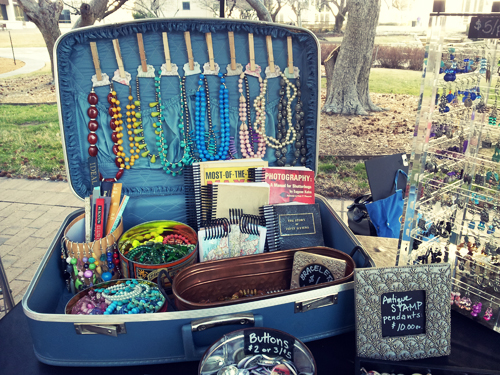
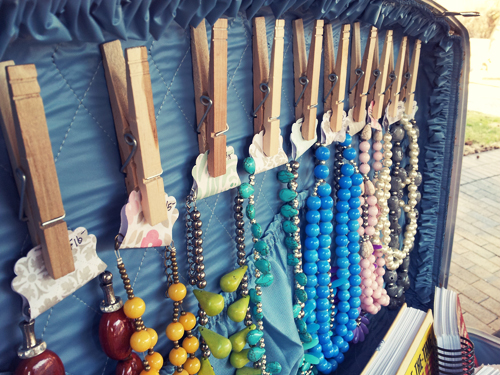
One of the best favors you can do yourself as a craft vendor is to create display spaces that can do double or triple duty. The blue suitcase above is one of my favorite examples. The clothespins on the back can hold whatever I need them to - necklaces, earrings, signs, etc. I have divided up the bottom with tins and canisters because they have lids that can be taken off and the items inside can be displayed as is. The other great thing about suitcases that they are easy transportation to and from the show!

clothespins

closeup3

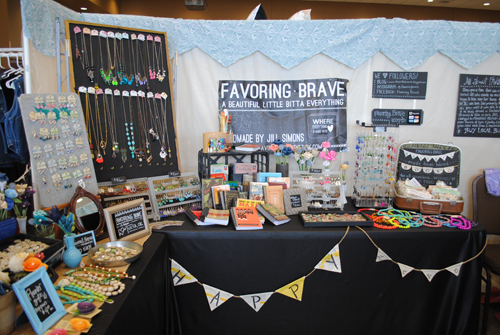
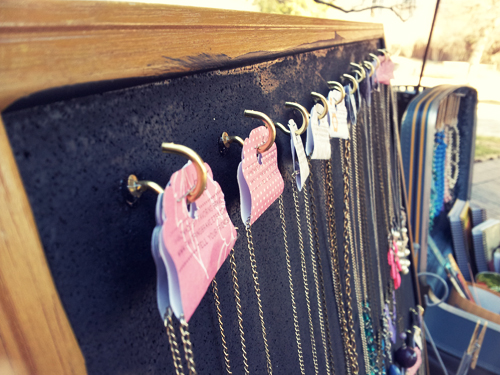
Also, back in the left corner you can see my big black corkboard, which I used with cup hooks from the hardware store to create more versatile space. I use it to hang necklaces, earrings, etc. 

cuphooks

Think about what it is that you sell and what you might like to sell in the future and how those items can best be displayed. Having a good amount of space that can change with your changing inventory will help you be most ready for whatever shows and quick turn arounds might come your way.

Read the rest of my Craft Fair-ology posts for even more ways to use your space and optimize your craft fair performance!

Tuesday, November 27, 2012

craft fair-ology: fabric covers for mobile walls

8368512562_2ba772621d_z

If you're just joining me, this is "Craft Fair-ology," my regular feature on helpful tips and hints for selling handmade goods at craft fairs.

But wait, you don't have to be a craft vendor to learn something useful! I will be mentioning how to apply these tips and techinques for display and storage to other aspects of your life as well... truly win-win! 

walls in action2

So last week I shared my method for creating a frame for mobile walls and so this week we will cover the creation of cloth covers to inclose your space.

The covers I'm going to show you are made to fit the specific panels I described last week, so head back to the last one to check those out before you jump in here.

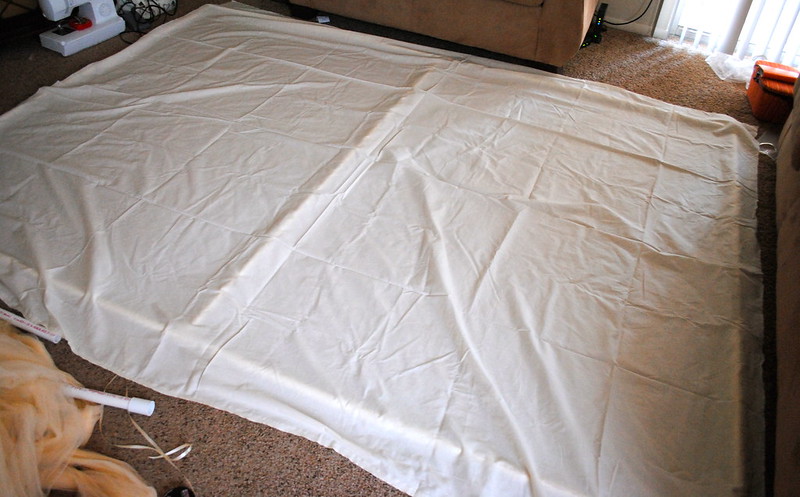
The first thing I did was lay out the back wall piping and cover it with my cloth to make sure that it would cover it completely. I used muslin. For my 8x6 back wall I needed 3 yards of 52inch fabric, and mine cost $10.32 at $3.44/yd.

DSC_0022

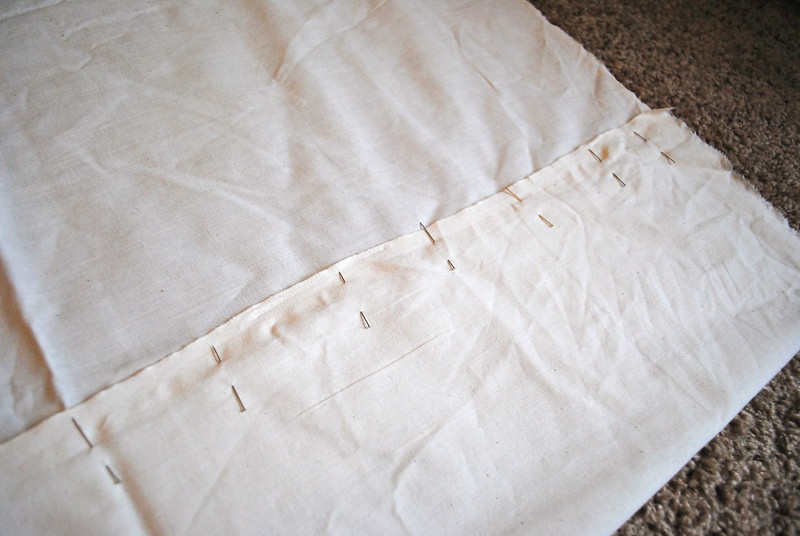
Next I measured it out the same amount of space at the top and the bottom and pinned it up. Trick I learned in costume design: Pin vertically and you can leave your pins in while you sew on the machine, like so:

DSC_0023

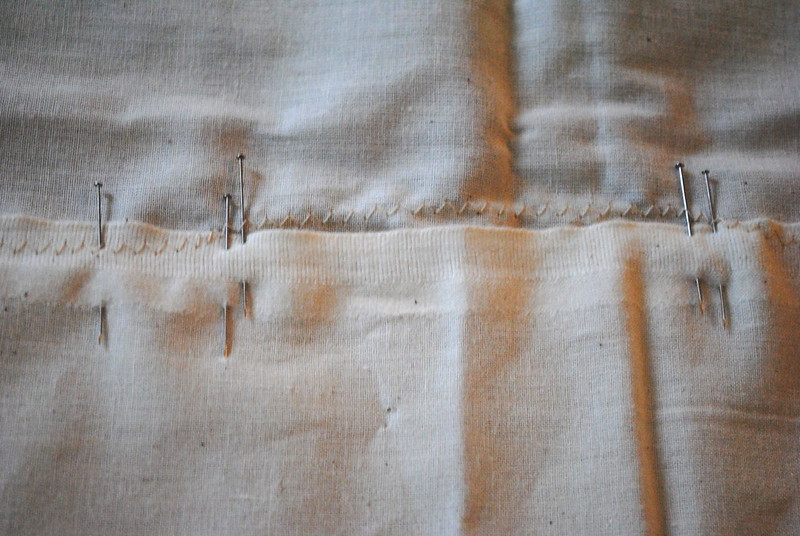
Because I have a stabilizing bar running up the middle of the back I needed to have an opening in the hem for that joint. To make sure I knew where to stop sewing on the hem I used two pins close together to show me where the hole was supposed to be, as shown below.

DSC_0026

For the sides I used a more unorthodox technique. I knew that fabric for the whole booth could potentially cost a fortune, but I happened to have a ton of tulle lying around from my wedding and I decided to try something with it.

DSC_0001

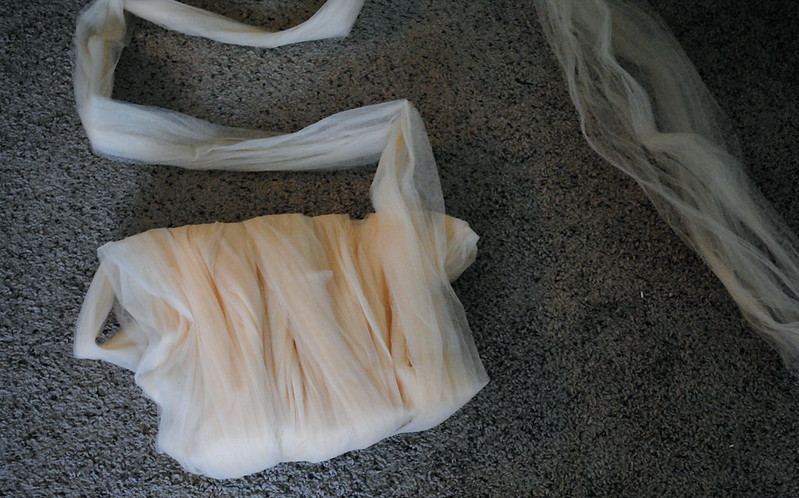
Tulle is a great option for walls because it lets light through, it can be very versatile, especially when the colors are neutral like this. First I tried keeping the tulle bunched up and wrapping it around the frame while the frame was attached to the back wall lying on the ground. This is a good option if you have a lot of tulle in one piece, but mine were already cut into pieces, so I took a different approach.

DSC_0005

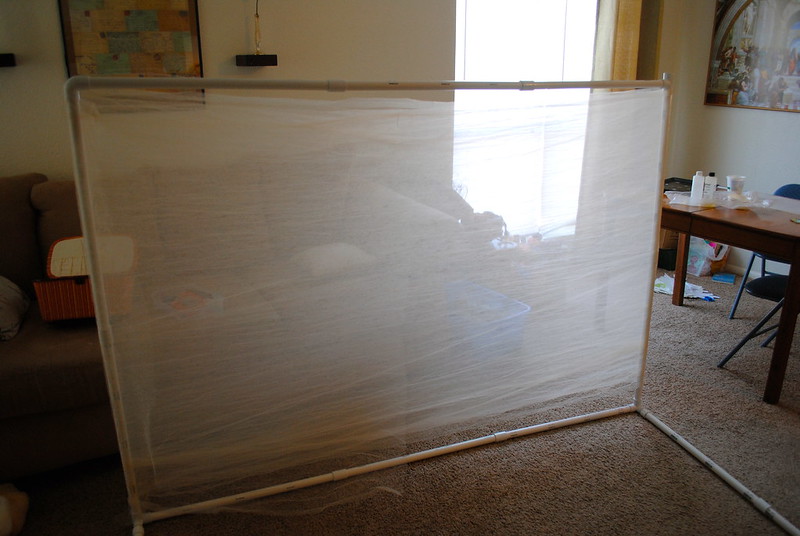
Instead I spread the tulle out completely, which was about exactly the width I needed for the 4ft walls and wrapped it around the frame out flat, as in the picture below:

DSC_0007

When you stand it up it looks like this!

DSC_0009

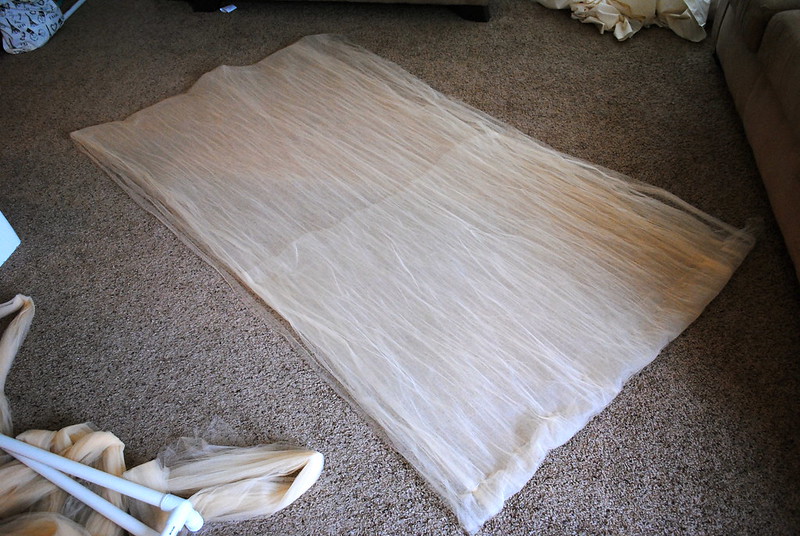
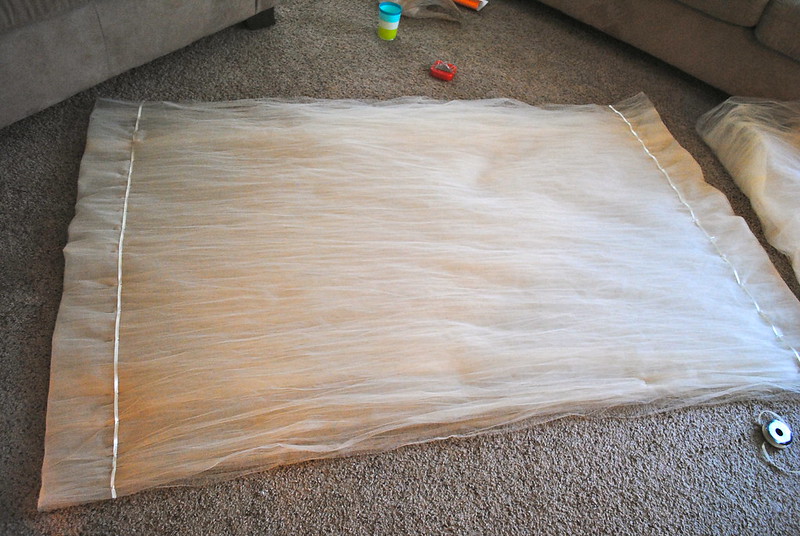
Then I laid it back down, with the back wall on the ground, and pinned up and down along the top and bottom to make sure everything stayed in the right place. Then I carefully removed the end piece so that the fabric was wrapped between two freestanding poles. I gently slid the fabric up off the poles and laid it out on the ground.

DSC_0010

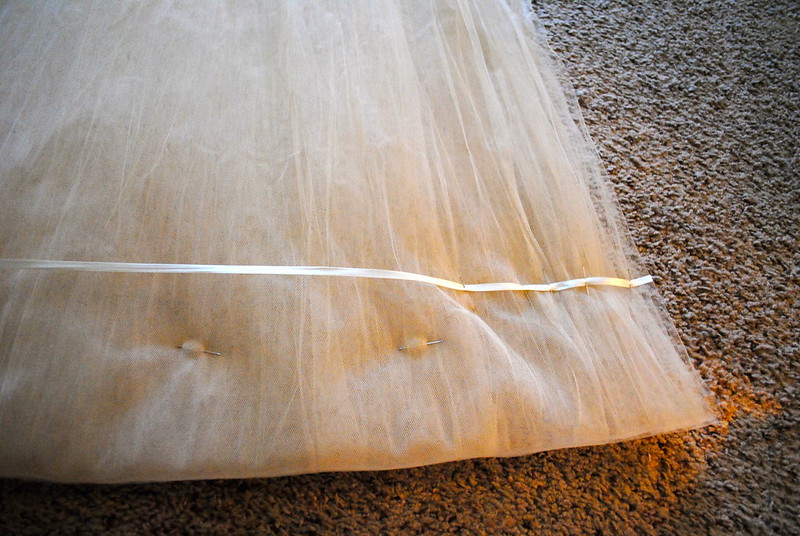
Tulle is very hard to sew by itself, so I chose to add ribbon to make it easier to sew, but you can also sew along a piece of tissue paper if you don't wanted the added embellishment. I pinned the ribbon along the length of the top and bottom to give me a sewing guide.

It's also worth mentioning that I left a LOT of space for my "tubes" at the top and bottom. The bigger the space the easier it is to just slide the pipes into them, and believe me, you don't want to be fighting for every inch getting a pipe through a tight tube when time is of the essence.

DSC_0014

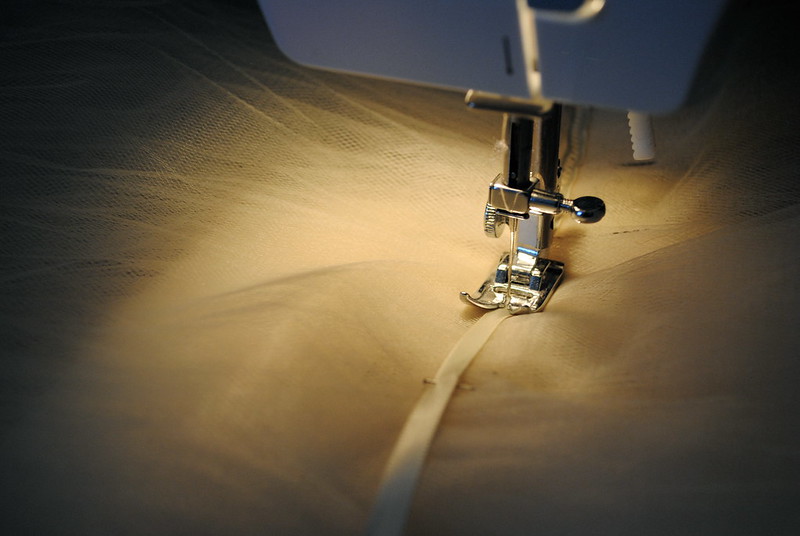
All done and time to sew! Set your machine to a zigzag and get sewing.

DSC_0017

DSC_0019

Repeat for the tops and bottoms of all sides. If you were smart and pinned vertically it all goes quickly, but just make sure and pull them all out!

DSC_0020

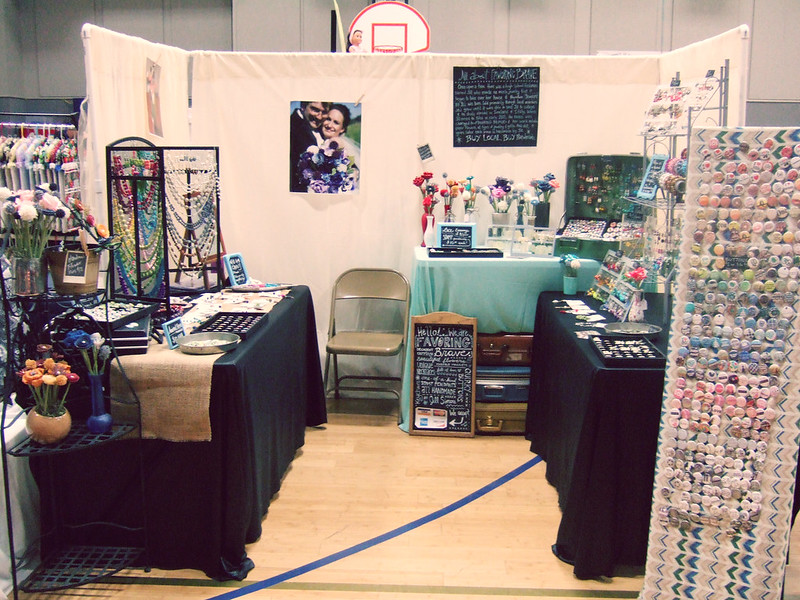
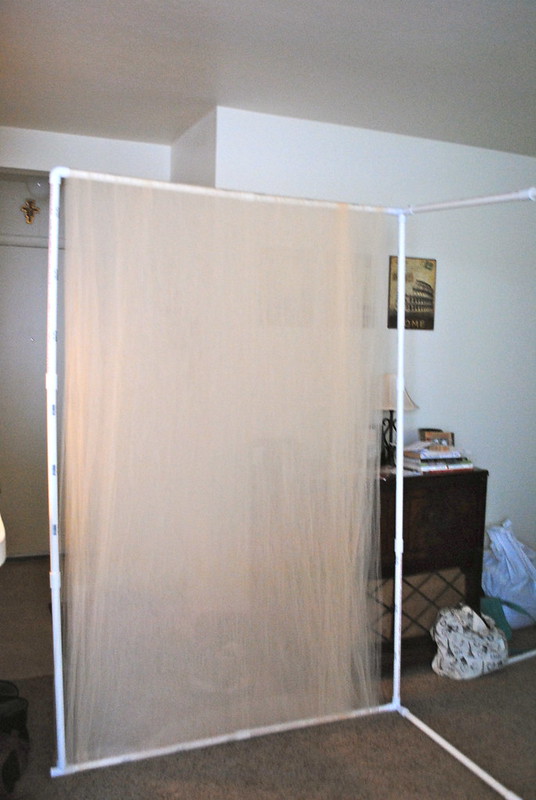
Here is the finished product. The sides are the tulle and the back is the the muslin. Not too shabby, huh? 
 
walls in action2


See you then!

peace&love,
Jill

Wednesday, November 21, 2012

craft fair-ology: frame for mobile walls

8368512562_2ba772621d_z

Welcome to a brand new blog feature called "Craft Fair-ology" will take place every Tuesday from now until I stop having helpful tips to give you! 

But wait, you don't have to be a craft vendor to learn something useful! I will be mentioning how to apply these tips and techinques for display and storage to other aspects of your life as well... truly win-win!

walls in action

Me and my plain Jane moveable walls - you'll find out how to fancy them up in the coming segments!

If you've ever sold at a craft fair, you know that there are a lot of factors to consider - the audience, the space you'll have, the items you want to take, the temperature - everything! You never know who you'll be set up next to, whether you'll be near a wall, what the color scheme will be in the room - sometimes you're not even sure of the dimensions you'll have to work with! It's easy to get overwhelmed. There's so much to be prepared for!

So here's a great way to deal with some of these stressors and grab a little bit more control: build yourself some easy, DIY, moveable walls.

So whether you are an entrepreneurial DIY-er or a Scentsy consultant, a crafter or a person looking to be creative with your living space, this easy technique for mobile walls is for you!

DSC_0004
Welcome to my living room.

Okay, so, here's how it works:

These walls are made out of fabric and PVC piping. Today we will go over the piping - what to get, how much to get, and how to put it together. Hop back over here next Tuesday for the full tutorial on making the fabric covers for the walls and putting it all together.

My wall strategy is to have what I need to make booths from 8x8 to 10x10 without changing what I bring with me:
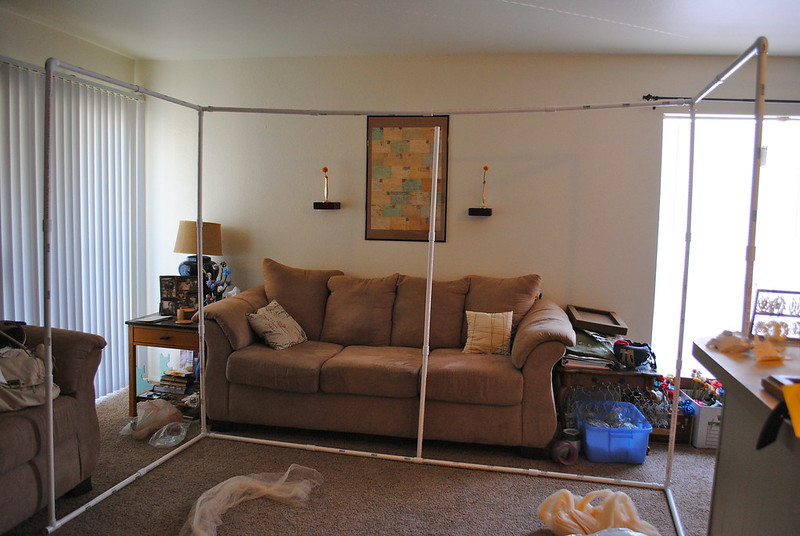
  • When I am at a show with 8x8 booths, I have one 8ft long x 6 ft tall back wall and two 4 ft long x 6 ft tall side walls so the front half of the space is not enclosed, as in the picture at the top of this post.
  • When I am at a show with 10x10 booths, I have one 10ft long x 6ft tall back wall, one 2ft long x 6 ft tall side wall and one 4 ft long x 6 ft tall side wall, which makes for a pretty open space.
My booth space is not fully inclosed, since I like to keep some camaraderie between my neighbor vendors and myself, but this tutorial can be adapted to make any size enclosure, just be sure to adapt the shopping list accordingly.

I bought 1/2 inch PVC pipe precut into 2 ft. sections.
  • If you are ambitious/like power tools/have a bribe-able handy person in your life you can buy the 10 ft long pieces of PVC, which are significantly cheaper per foot, and cut them yourself. For us mere mortals, this is unnecessarily messy/complicated and so we bite the bullet and buy the stuff pre-cut.
Six feet tall seems to be a very good height for these walls, as they are tall enough to enclose the space, but aren't so tall that the fram gets too heavy for itself. Each vertical piece requires (3) 2ft pieces and (2) connectors.

It's also a good rule of thumb not to have more than 4ft of horizontal piping without some kind of vertical support, 6ft at the most. This is why I always plan to have a "crossbeam" in the middle of the back wall.

Shopping List (For my version):
  • (31) 2ft sections of 1/2 inch PVC piping
  • (18) 1/2 inch PVC pipe connectors 
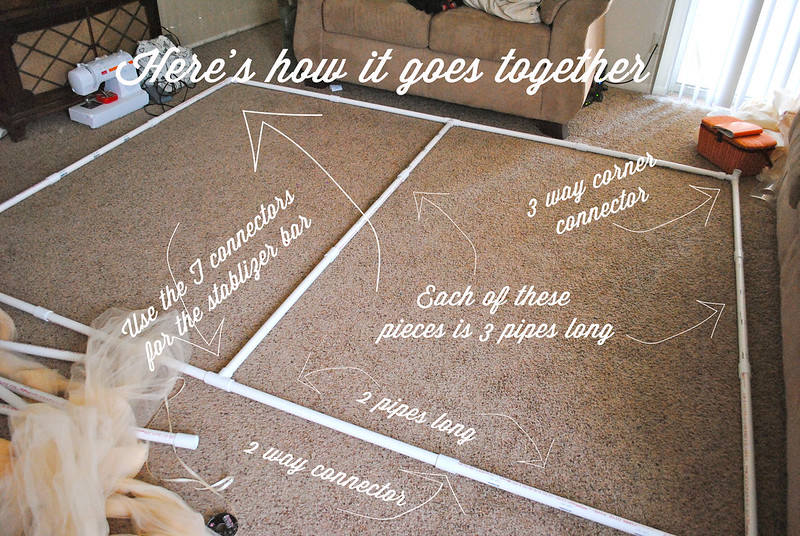
  • (4) T connectors (for the stabilizer bar down the middle of the back, an the bottom front corners)
  • (4) Ninety degree 3 way connectors (to connect the side walls to the back wall)
  • (2) Corner connectors (For top front corners)
This all cost me about $68, even buying the pipes pre-cut. You could potentially cut this cost by half if you cut all the pipes yourself.

Here's how to put it together:

Lay out the back wall on the ground first. (Excuse the fact that the upper left corner is not connected with the 90 degree 3 way connector like it's supposed to be. Use the 3 way connectors at all 4 of the outside angles.)

pipe diagram


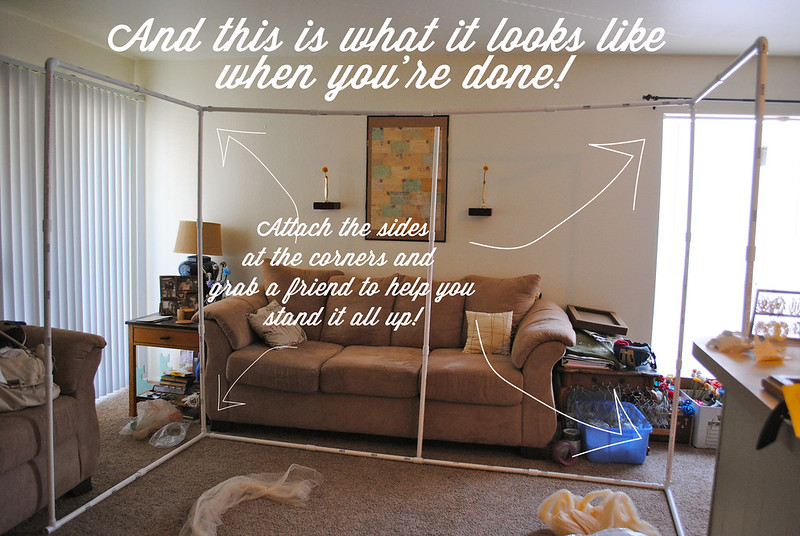
After you've assembled the back, add on the two sides WHILE IT'S STILL LAYING DOWN. You WILL get frustrated if you try to do it standing up. Trust me. Please. Have some one grab one side will you grab the other and slowly pull on the frame to stand it up, making sure to keep both sides even at all times.

And just as a side note, I sell by myself all the time and shows and there is always someone around, another vendor, a helper, an organizer, who is more than willing to help stand it up for you. It's the only step of the process that requires help.

completeframe

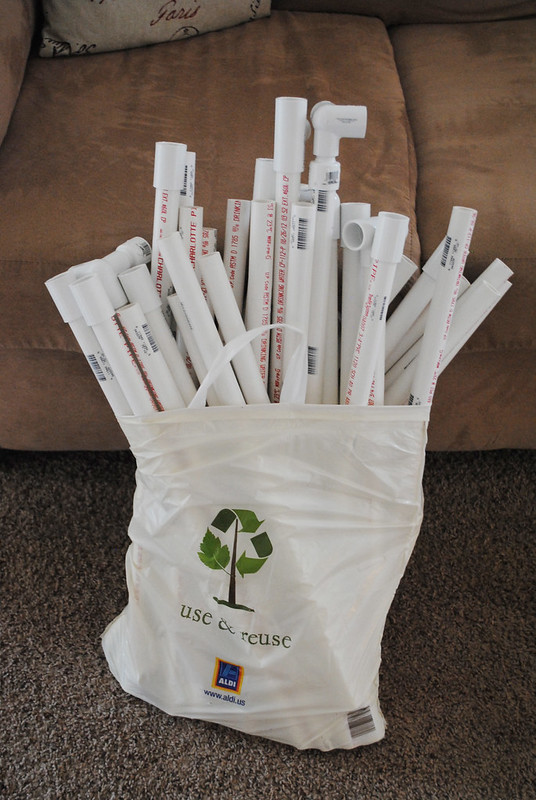
But here's the best part: when you pack up, this is how much space this takes:

pipes
Yay!

And there you go! Step one: done! Come back next week to get them all covered up and looking pretty!

peace&love,
Jill


*************************************************

P.S. Have you heard about the 50 States of Brave Blogger Search? If you're a blogger in the US, you might want to get involved! Go here to find out what it is and what you need to do! 

Friday, November 2, 2012

craft-fair-ology: a grate idea

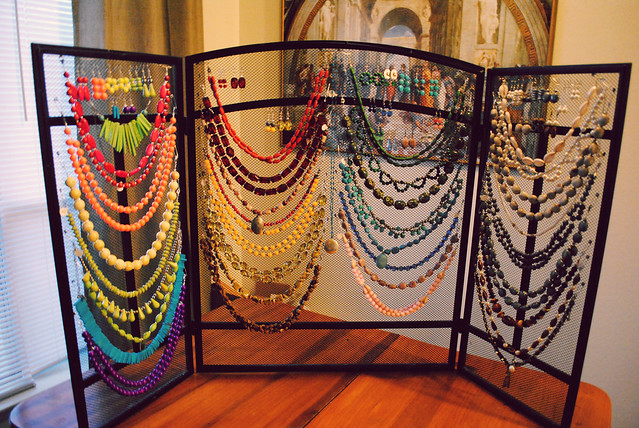
I am guest blogging today over at Make Tulsa, so I'd love for you to hop on over there and check out my post about converting an old fireplace grate into a jewelry display!

grate


In case you've missed them, here are some of my earlier tutorials for jewelry storage:
Creative Ways to Store Your Jewelry
A Vintage Suitcase Reboot
Musical Jewelry Box
Jewelry Frame *tutorial*
Brooch Organizer *tutorial*

And here's a guest post I did while interning for College Fashion:
4 Creative Ways to Store Your Jewelry at College

peace&love,
Jill


Related Posts Plugin for WordPress, Blogger...